
Article reproduced form The Jackdaw magazine issue 26th January 2026
Malmesbury is changing — and how we travel around the town needs to change too. A new Local Cycling and Walking Infrastructure Plan (LCWIP) is being developed, aimed at making every day journeys around the town healthier, safer and more enjoyable for everyone.
So, what exactly is an LCWIP, and why does it matter to Malmesbury residents?
Strategic Blueprint to Improve Walking and Cycling
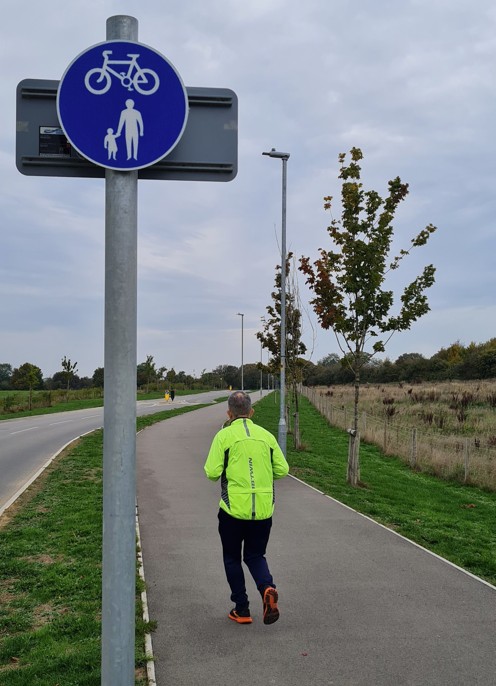
An LCWIP is a long-term plan that sets out where to invest in walking, wheeling, and cycling infrastructure over the next decade. It looks at all active travel options, including footpaths, pavements, cycle routes and how they connect at road-junctions. A key objective of the plan is to encourage more people to choose an active travel option for local journeys, by providing safe, segregated, and accessible pathways available for all users.
Wiltshire Council is currently working with local groups to create LCWIPs for 11 market towns across the county, alongside four larger towns that already have plans in place[i]. In Malmesbury, a stakeholder team representing local walking and cycling groups, plus residents from the main housing areas, is working with local town & parish councillors, to develop the best possible plan.
In December, Cllr Martin Smith, Cabinet Member for Transport & Highways, announced that Wiltshire has been awarded £3.2 million over four years to improve active travel routes across the county[ii]. So, having a high-quality, approved local plan is essential, because future government funding will be prioritised for projects already identified within an LCWIP.
In short: no plan, means no funding.
Why Malmesbury Needs a New Approach
Malmesbury has grown rapidly in recent years. The population has increased from just over 5,000 in 2001 to more than 7,500 today[iii], with hundreds of new homes built in the past five years and more new developments expected to follow.
Each new home usually brings one or two extra cars, adding pressure to a road network that was never designed for modern vehicles and traffic levels. Anybody travelling through the town during school-run times, will know about the daily traffic jams along our busy, narrow streets. Malmesbury’s historical ‘infrastructure design system’ was based around the horse & cart, not modern SUV’s and buses!
Nationally, the UK government wants half of all short urban journeys to be walked, wheeled or cycled by 2030[iv]. Wiltshire Council’s own transport plan (LPT4) echoes this ambition, aiming to make walking or cycling the “natural choice” for short trips, using safe, well-connected and easy-to-navigate routes.
What are the Benefits for Residents?
A successful active travel plan could deliver wide-ranging benefits:
- Better health and wellbeing, by making everyday movement part of daily life
- Less traffic and cleaner air, especially at peak times
- Safer streets, designed for people rather than vehicles.
- Improved access to shops, schools and services for people with limited mobility
- A stronger local economy, as visitors find Malmesbury easier and more pleasant to explore
Practical examples of infrastructure improvements could be shared-use road crossing points, which give children travelling to school a safe way to cross busy roads, or simply replacing old footpath stiles with fully accessible gateways for our less-able residents.
Above all, the aim is simple: to make Malmesbury an even better place to live, work and visit.
What’s the Timeline?
Work on the Malmesbury LCWIP began in October 2025 and is due to be completed by the end of March 2026.
Initial mapping has already identified potential key walking and cycling routes in and around the town. These are currently being reviewed by local stakeholders and parish councils. A revised set of proposals is expected by the end of January, followed by a full public consultation during February and March.
Once approved, the plan will shape transport investment in Malmesbury for the next ten years.
How You Can Have Your Say
The public consultation is the most important stage of the project for residents to get involved.
As you walk, wheel or cycle around the town over the coming weeks, take note of what works — and what doesn’t. Are crossings awkward? Pavements too narrow? Routes disconnected or unsafe. Your local knowledge can help ensure the final plan reflects your valuable experience and delivers new infrastructure which makes active travel the natural choice for all!
This is a chance to influence how Malmesbury moves in the future. When the consultation opens, make sure your voice is heard.
Keith Freegard January 2026
Reference list:
[i] https://www.wiltshire.gov.uk/article/9503/Council-thanks-respondents-to-cycling-and-walking-consultations
[ii] https://www.wiltshire.gov.uk/article/15504/Wiltshire-Council-awarded-3-1m-to-invest-in-walking-wheeling-and-cycling-schemes
[iv] Active Travel England: Corporate plan 2023 to 2025 - https://assets.publishing.service.gov.uk/media/6504468dfc63f6000d957346/active-travel-england-corporate-plan-2023-2025.pdf